
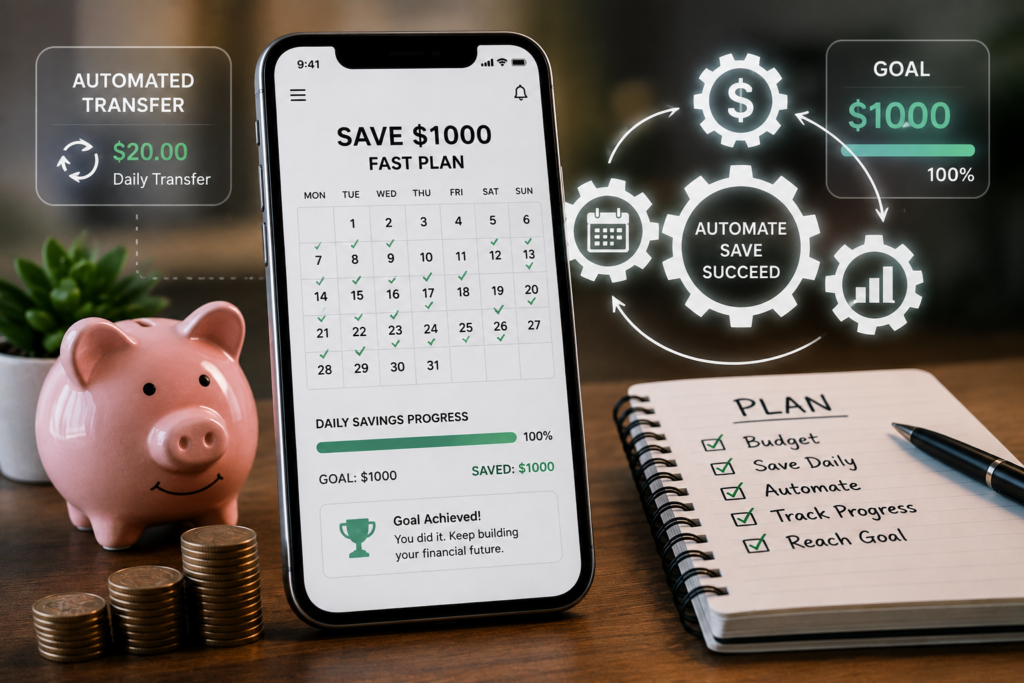
In a world filled with endless notifications, work responsibilities, and busy schedules, manually managing your money every week is a recipe for burn-out. Calculating bill due dates, manually transferring money into savings, and moving funds around on your mobile phone takes time—and it leaves room for human error. One forgotten due date can lead to annoying late fees or a sudden hit to your credit score.
What if your money managed itself in the background while you slept?
In 2026, setting up a fully automated financial system is easier than ever. By spending just one hour creating a “Set-and-Forget” pipeline, you can ensure your bills are paid on time, your savings grow automatically, and your debt gets paid off without you lifting a finger.
Here is the exact step-by-step framework to put your money on autopilot today.
Step 1: Establish Your “Financial Hub”
Every automated system needs a central command station. In personal finance, this is your primary checking account. All income flows into this hub, and all outgoing payments branch out from here.
To make this step seamless:
- Have 100% of your paycheck sent directly to this checking account using Direct Deposit.
- Keep a permanent $500 buffer in this checking account at all times. This prevents accidental overdraft fees if bills overlap unexpectedly.
Step 2: Automate Your “Future Self” First
The golden rule of wealth building is to pay yourself first. Most people pay their bills, spend money on leisure, and try to save whatever is left over at the end of the month (which usually ends up being $0).
Flip the script by automating your savings the exact day your direct deposit hits:
- Automate Retirement: Set up an automatic payroll deduction for your 401(k) or recurring transfer to an Individual Retirement Account (IRA).
- Automate Emergency Savings: Set an automatic transfer on payday that moves money directly from your checking account into a High-Yield Savings Account (HYSA). If you are building your initial safety net, see our complete checklist on How to Build an Emergency Fund in 2026.
Step 3: Put Fixed Monthly Bills on Autopay
Every month, you have non-negotiable expenses that stay roughly the same size: rent/mortgage, internet, utility estimates, insurance, and streaming services.
Log into each provider’s online portal and toggle Autopay ON:
- Pro Tip: Schedule all auto-payments to occur 1 to 2 days after payday. This ensures the direct deposit has cleared your account before any company attempts to withdraw funds.
- Set up low-balance text alerts on your mobile banking app so you get notified if your checking account balance ever drops below $200.
Step 4: Put Your Debt Payoff on Autopilot
If you are working toward becoming debt-free, manual payments can slow down your momentum. You can automate your debt reduction based on your preferred strategy:
- For Minimum Payments: Set up automatic monthly payments for the minimum required balance on all your credit cards so you never suffer a late fee or penalty APR.
- For Extra Accelerated Payments: Choose your target card using How to Pay Off Credit Card Debt Fast and set a recurring extra payment through your bank’s bill-pay feature every single month.
Step 5: Master the 50/30/20 Balance
Once your savings, fixed bills, and debt payments are running on autopilot in the background, whatever money remains in your checking account is your Guilt-Free Spending Cash.
You can spend this remaining money on groceries, hobbies, dining out, and entertainment without feeling stressed or guilty, because you already know your essentials and future goals are 100% taken care of. If you want to fine-tune your spending percentages, review our breakdown on The 50/30/20 Budget Rule.
The 15-Minute Monthly Maintenance Check
While an automated financial system handles 95% of the heavy lifting, you shouldn’t ignore your money completely.
Set a recurring calendar reminder on your phone for the 1st of every month to do a 15-minute checkup:
- Scan your bank and credit card statements for sneaky subscription price hikes or unauthorized fees.
- Verify that all automatic transfers executed smoothly.
- Adjust your transfer amounts if you received a pay bump or had a major life change.
Final Thoughts
Managing your finances doesn’t require hours of spreadsheets or endless stress. By taking one hour today to link your accounts, enable autopay, and automate your savings, you remove emotional friction and guarantee steady financial progress every month.