
Managing money has become more challenging than ever. Between rising grocery prices, increasing rent, higher insurance premiums, childcare costs, and inflation, many American households feel like their paycheck disappears before the month is over.
The good news is that budgeting doesn’t have to involve complicated spreadsheets or dozens of spending categories.
One of the easiest and most effective budgeting systems is the 50/30/20 Budget Rule. It helps you organize your income into three simple buckets so you always know where your money is going. Whether you’re a young professional, a growing family, or planning for retirement, this budgeting method can help you gain control of your finances without making life feel restrictive.
What Is the 50/30/20 Budget Rule?
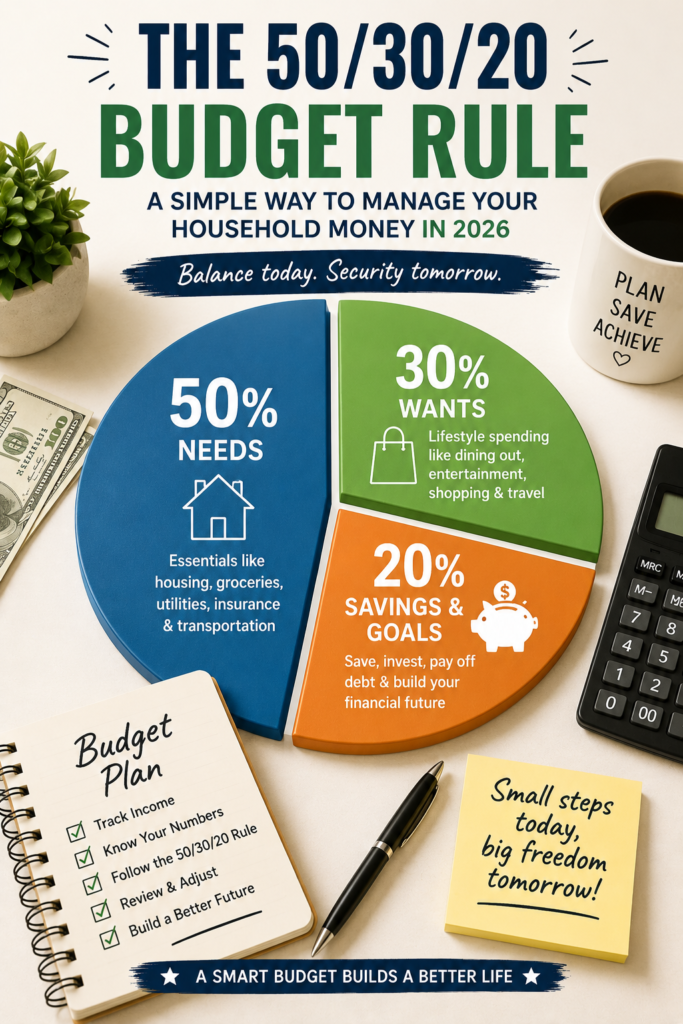
The 50/30/20 rule divides your after-tax monthly income into three spending buckets.
Instead of tracking every dollar, you simply allocate your income into:
🏠 Bucket 1: 50% — Needs
These are the essential expenses you must pay every month.
Examples include:
- Mortgage or rent
- Property taxes
- Utilities
- Groceries
- Health insurance
- Car payments
- Fuel
- Childcare
- Minimum debt payments
- Internet for work or school
If you stopped paying these bills, your daily life would be significantly affected.
Example
Monthly Take-Home Pay: $5,000
50% for Needs:
$2,500
🎉 Bucket 2: 30% — Wants
“Wants” are expenses that improve your lifestyle but aren’t absolutely necessary.
Examples include:
- Dining out
- Streaming subscriptions
- Vacations
- Shopping
- Gym memberships
- Entertainment
- Coffee shop visits
- New gadgets
- Weekend trips
These expenses make life enjoyable but can usually be reduced if money becomes tight.
Example
Monthly Income: $5,000
30% for Wants:
$1,500
💰 Bucket 3: 20% — Savings & Financial Goals
This is the bucket that builds your future.
Instead of spending every dollar you earn, you dedicate at least 20% toward improving your financial security.
This bucket may include:
- Emergency fund
- Retirement accounts
- 401(k) contributions
- IRA investments
- College savings (529 Plans)
- Extra mortgage payments
- Paying off high-interest credit cards
- Investing in index funds
Example
Monthly Income: $5,000
20% Savings:
$1,000
This money works for your future instead of disappearing on short-term spending.
Visual Example
Imagine your monthly take-home pay is $6,000.
| Bucket | Percentage | Monthly Amount |
|---|---|---|
| 🏠 Needs | 50% | $3,000 |
| 🎉 Wants | 30% | $1,800 |
| 💰 Savings & Debt Reduction | 20% | $1,200 |
This simple framework makes budgeting much easier than trying to categorize every purchase.
Why the 50/30/20 Rule Works So Well
Unlike many strict budgeting systems, the 50/30/20 rule gives you flexibility.
Instead of feeling guilty for enjoying life, it allows room for both spending and saving.
Benefits include:
- Easy to remember
- Suitable for beginners
- Encourages healthy saving habits
- Helps prevent overspending
- Reduces financial stress
- Works for most income levels
Adjusting the Rule for 2026
Housing costs have increased in many parts of the United States.
If you live in cities like:
- New York
- Boston
- San Francisco
- Seattle
- Miami
your housing costs alone may exceed 50% of your income.
That’s okay.
Many financial planners recommend using the rule as a guideline, not a strict requirement.
You could use:
- 60/20/20
- 55/25/20
- 50/20/30
The important part is maintaining a balance between living expenses and long-term financial goals.
Common Budgeting Mistakes
Saving What’s Left Over
Many people save only if money remains at the end of the month.
Instead, treat savings like a monthly bill.
Pay yourself first.
Ignoring Small Purchases
A daily $8 coffee may not seem significant.
Over one year:
$8 × 365 = $2,920
Small expenses often have a larger impact than people realize.
Using Credit Cards for Wants
Credit cards can quickly turn lifestyle spending into expensive debt.
If you’re carrying balances every month, consider reducing your “Wants” budget until your debt is under control.
Forgetting Irregular Expenses
Many families budget for monthly bills but forget about:
- Car insurance
- Property taxes
- Holiday shopping
- School supplies
- Home maintenance
Create a sinking fund for these annual expenses.
How to Start Using the 50/30/20 Rule Today
Step 1
Calculate your monthly after-tax income.
Step 2
Multiply it by:
- 50%
- 30%
- 20%
Step 3
Review your last three months of bank statements.
Compare your actual spending with your budget.
Step 4
Adjust slowly.
Don’t try changing everything in one month.
Step 5
Review your budget every month.
Life changes, and your budget should too.
Does the 50/30/20 Rule Work for Everyone?
The rule is an excellent starting point, but every household is different.
It works especially well for:
- Young professionals
- Couples
- Families
- First-time homeowners
- Recent graduates
- Anyone trying to stop living paycheck to paycheck
If your income is lower or your housing costs are unusually high, you can modify the percentages while keeping the same three-bucket concept.
Final Thoughts
The 50/30/20 Budget Rule isn’t about restricting your lifestyle—it’s about giving every dollar a purpose.
By organizing your income into three simple buckets—Needs, Wants, and Savings—you create a balanced financial plan that supports both your current lifestyle and your future goals.
In 2026, when living costs continue to challenge many American households, simplicity is one of the most powerful financial tools you can have.
You don’t need a complicated budgeting system to succeed. You simply need a plan you can follow consistently.
Start with your next paycheck, divide it into the three buckets, and you’ll be taking an important step toward greater financial confidence and long-term stability.
Frequently Asked Questions (FAQ)
Is the 50/30/20 budget rule good for beginners?
Yes. It’s one of the simplest budgeting methods because it focuses on three broad spending categories instead of tracking dozens of individual expenses.
What if my housing costs are more than 50%?
That’s common in many high-cost areas. Adjust the percentages to fit your situation while continuing to prioritize saving and debt reduction.
Should debt payments count in the 20% bucket?
Minimum required debt payments belong in the “Needs” bucket. Extra payments toward high-interest debt can be included in the 20% “Savings & Financial Goals” bucket.
Can I use the 50/30/20 rule with irregular income?
Yes. Calculate your average monthly after-tax income over the past 6–12 months and use that as your budgeting baseline. If your income varies widely, prioritize essential expenses and emergency savings during higher-income months.